
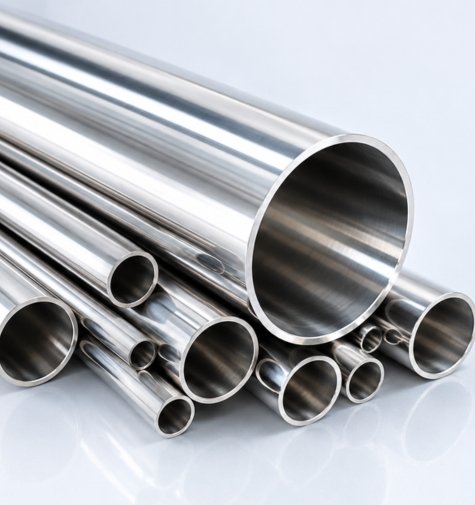


High-Purity Tubing for Critical Process Systems
Ultra high purity (UHP) tubing is used in systems where unwanted particles, surface contamination and residues can affect process quality, product integrity or equipment performance. These tubes are particularly important in semiconductor gas distribution and other applications that require controlled internal surface conditions.
Depending on the required specification, ultra high purity stainless steel tubing may undergo electropolishing or other controlled finishing processes to achieve the specified surface roughness and internal finish. The suitability of the tubing depends on more than its appearance: material grade, cleanliness, dimensional tolerances, surface condition, fabrication and installation practices all contribute to system performance.
New Eagle Industrial Corporation supplies tube solutions based on project-specific material and finish requirements. Customers can specify the tube dimensions, alloy, target Ra value, length and applicable standards when requesting a quotation.
Key features of Ultra High Purity Tubes
- Controlled surface roughness: Available with specified Ra requirements to suit the intended process.
- Electropolished and polished finishes: Finish selection according to application and agreed technical specifications.
- Corrosion-resistant materials: Stainless steel and selected nickel alloys for compatible operating environments.
- Precision dimensions: Outside diameter, wall thickness and length selected according to project requirements.
- Critical-process applications: Suitable for consideration in semiconductor, pharmaceutical, biotechnology and other high-purity systems.
- Inspection options: Surface roughness measurement and dimensional verification according to agreed inspection requirements.
Materials and Grades for Ultra High Purity Tubing
Material selection depends on the process medium, operating conditions, corrosion requirements, fabrication method and cleanliness specifications. The following grades are included in the supplied product brief; the exact grade and availability should be confirmed when ordering.
| Material / Grade | Typical Selection Considerations |
|---|---|
| Stainless Steel 316L | Low-carbon stainless steel commonly considered for high-purity process tubing and corrosive service. |
| Stainless Steel 304L | Low-carbon stainless steel for compatible process environments. |
| Stainless Steel 904L | High-alloy austenitic stainless steel for selected demanding corrosive environments. |
| Hastelloy C-22 | Nickel-based alloy for applications requiring resistance to a range of corrosive media. |
| Hastelloy C-276 | Nickel-based alloy for demanding chemical and corrosive environments. |
| Inconel | Nickel-based alloy family; the specific grade must be selected according to service requirements. |
The grade alone does not establish semiconductor suitability. For critical gas delivery applications, confirm the precise alloy designation, surface finish, cleanliness requirements and compatibility with the process gases.
Surface Finish and Ra Values for Ultra High Purity Tubes
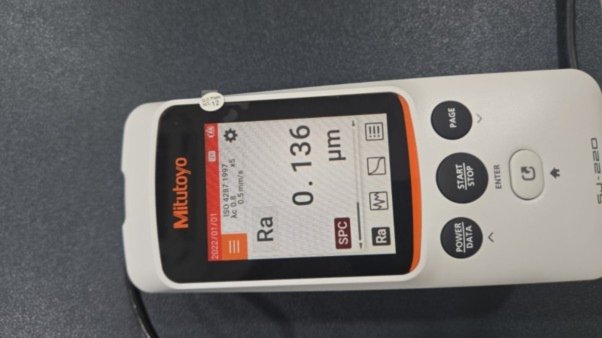
Surface roughness is an important consideration when selecting high-purity tubing. The average roughness value, Ra, expresses the average deviation of a measured surface profile from its mean line. It is commonly expressed in microinches (µin) or micrometres (µm).
Lower Ra values generally indicate a smoother measured surface. However, an Ra value by itself does not establish cleanliness, particle levels, corrosion performance or compliance with a particular industry standard.
| Ra (µin) | Ra (µm) | RMS (µin, Approx.) | ISO 1302 Grade | Typical Use |
|---|---|---|---|---|
| 5 | 0.13 | 5.6 | ~N3 | Ultra-high-purity (UHP) semiconductor gas lines |
| 10 | 0.25 | 11 | N4 | UHP / EP semiconductor, WFI |
| 15 | 0.38 | 17 | N5 | Electropolished (EP) pharmaceutical / biotechnology tubing |
| 20 | 0.51 | 22 | N5–N6 | EP or mechanically polished (MP) pharmaceutical / biotechnology tubing |
| 25 | 0.64 | 28 | N6 | Mechanically polished (MP) sanitary tubing |
| 30 | 0.76 | 33 | N6 | Mechanically polished sanitary applications |
| 32 | 0.81 | 36 | N6 | General sanitary / food specifications |
| 40 | 1.0 | 44 | N7 | Standard polished tubing |
| 63 | 1.6 | 70 | N7 | Commercial finish |
| 125 | 3.2 | 139 | N8 | Mill finish / not high purity |
Note: The ISO 1302 roughness-grade column from the brief should be treated as indicative only. Surface-texture grades are not universally interchangeable with measured Ra values. RMS and Ra are different parameters, and the conversion is approximate.
Why does a low Ra value matter?
- A smoother internal surface can help reduce surface irregularities where particles or residues may accumulate.
- Electropolishing can improve surface characteristics when the process and material are suitable.
- Defined finish requirements help buyers establish measurable acceptance criteria.
- Ra measurements provide an objective way to check surface roughness against an agreed specification.
Standards for Ultra High Purity Tubes
Ultra high purity tubing requirements vary by industry and application. The governing standard should be selected according to the tubing material, product form, surface finish, intended service and customer specification.
| Standard | Relevance |
|---|---|
| SEMI F19 | Semiconductor-related requirements for electropolished stainless steel tubing and associated surface characteristics. |
| ASME BPE | Bioprocessing equipment standard containing requirements relevant to hygienic design and specified product surface finishes. |
| ASTM A269 | Specification covering certain seamless and welded austenitic stainless steel tubing for general service. |
| ASTM A270 | Specification covering certain seamless and welded austenitic sanitary tubing. |
Note: These standards have different scopes and should not be used interchangeably. Confirm the applicable standard, product requirements, surface finish, and supplementary requirements for each order.